The Great Barrier Reef stretches for more than 2,300 kilometres along the Queensland coastline and is home to an incredible diversity of marine life. From sea turtles and manta rays to migrating whales and playful dolphins, every region of the reef offers something unique.
While no wildlife encounter can ever be guaranteed, choosing the right destination and season can significantly increase your chances of seeing the animals that are highest on your wish list.
This guide highlights some of the most sought-after marine wildlife encounters on the Great Barrier Reef and where to find them.
Check out these top spots in which to get up close and personal with birds, turtles, whales, rays, platypus, sharks, fish, crocodiles, koalas and even a kangaroo or two.
Can You See Whales On The Great Barrier Reef?

Absolutely. Each year, thousands of humpback whales migrate along the Queensland coastline as they travel to warmer waters to breed and raise their calves. From the Gold Coast, Hervey Bay, the Whitsunday Island and north to Townsville, Cairns & Port Douglas - you can explore all the whale encounter tours on the Great Barrier Reef and book the right one that suits you.
Hervey Bay:
Hervey Bay is considered one of Australia's premier whale-watching destinations. The sheltered waters provide a resting area for humpback whales, creating exceptional viewing on a whale watching tour operating between July - October.
Cairns & Port Douglas:
Head to Tropical North Queensland between June and July and out on the Great Barrier Reef with a Cairns or Port Douglas tour with a strict permit for a chance to view Dwarf Minke Whales and even Swim with the Minke Whales, which migrate there every year to the warmer waters. These encounters occur on the Ribbon Reefs north of Cairns and Port Douglas. Only a small number of licensed operators are permitted to conduct these experiences, making them one of the most exclusive wildlife encounters on the Great Barrier Reef.
Whitsundays:
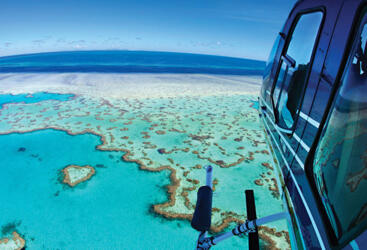
Whale sightings are increasingly common throughout the Whitsunday Islands during winter, particularly from July through September. The Whitsundays have now be officially designated as a Whale Heritage Area by the World Cetacean Alliance, making it along with Hervey Bay and 9 other world wide locations on the list. To behold these magnificent creatures in the Whitsundays, you might catch sight of humpback whales leaping gracefully from a safe distance while exploring Whitehaven Beach, embarking on a sailing cruise, or even soaring above the reef on a scenic flight.
Where Can You See Manta Rays On The Great Barrier Reef?

Few wildlife encounters are as memorable as seeing a manta ray glide effortlessly through crystal-clear water. With wingspans reaching several metres across, manta rays are often described as the underwater equivalent of a bird soaring through the sky.
Lady Elliot Island:
Lady Elliot Island is considered a prime spot in which to swim with Manta Rays who are attracted to this particular part of Queensland’s giant ecosystem all year round, with the peak season May - August. These gentle giants can grow as large as four metres wide and the chance to swim with them is unforgettable.
Southern Great Barrier Reef:
Rays are also commonly seen at Mantra Ray Bay on the Whitsundays, Lady Musgrave Island and Orpheus Island. On Daydream Island in the Whitsundays, partake in Stingray Splash, an experience where you can feed the baby stingrays at the Living Reef.
Where Are The Best Places To See Sea Turtles?

Sea turtles are among the most frequently sighted marine animals on the Great Barrier Reef. Whether you are snorkelling over shallow coral gardens or relaxing on a tropical island, turtle encounters are common in many reef destinations. Turtle nesting season is generally October to January with the Hatching Season December - April.
Cairns & Tropical North Queensland:
Cairns offers a range of opportunities to swim with turtles, including Green Island, Frankland Island, Low Isles and Fitzroy Island. You can also visit the Turtle Rehabilitation centre on Fitzroy Island.
Lady Elliot Island:
Lady Elliot Island is one of Australia's best destinations for turtle encounters. The island's coral lagoon provides ideal feeding habitat and visitors often see turtles while snorkelling directly from the beach. Between November and March, nesting and hatching activity can also occur on the island's beaches.
Lady Musgrave Island:
Located in the Southern Great Barrier Reef, Lady Musgrave Island offers calm lagoon waters where turtles are regularly spotted feeding and resting among coral bommies.
Southern Great Barrier Reef:
The Southern Great Barrier Reef is synonymous with turtle spotting and Bundaberg’s Mon Repos beach between November and January offers your best chance to witness loggerhead, green, leatherback and flatback turtles laying their eggs. From January to March, experience the wonder as the hatchlings make the precarious journey towards the ocean.
Where can I swim with Fish on the Great Barrier Reef.

So many fantastic fish, so little time. To swim with the handsome potato cod, head to the Cod Hole on Ribbon Reef on the Outer Great Barrier Reef in Tropical North Queensland. You’ll find plenty of Parrot Fish off of Green Island, in Tropical North Queensland, Maori Wrasse off of Hayman Island and Reefworld in the Whitsundays, and that lovable clown Nemo anywhere along the Great Barrier Reef.
Explore the full range of Great Barrier Reef Tours with opportunities to snorkel, scuba dive and even try Helmet Diving with the colourful fish of the region.
Shark Encounters on the Great Barrier Reef

Spotting a shark on the Great Barrier Reef is often one of the most exciting moments of a snorkelling or diving adventure. The species most commonly encountered are blacktip reef sharks, whitetip reef sharks and grey reef sharks, which are naturally curious but generally shy around humans. These important predators play a vital role in maintaining a healthy reef ecosystem and are frequently seen cruising along coral walls, reef drop-offs and sandy lagoons.
For many visitors, watching a reef shark glide effortlessly through the crystal-clear water becomes a highlight of their Great Barrier Reef experience and a reminder of just how diverse and healthy this marine environment can be.
To dive with sharks, head to Double Island Point’s Wolf Rock off of the Fraser Coast which is home to grey nurses, or head to Neptune's Reef World at Hervey Bay to snorkel with sharks. Further north, join a 3 - 7 night tour offering Shark Diving off the northern ribbon reefs in Tropical North Queensland. There’s plenty of harmless reef sharks along the Great Barrier Reef.
Coral Spawning on the Great Barrier Reef

Coral spawning is one of the most extraordinary natural events on the Great Barrier Reef and is often described as the reef's annual underwater reproduction spectacle. For just a few nights each year, usually during October, November or December following the full moon, millions of coral colonies simultaneously release tiny bundles of eggs and sperm into the water.
The event resembles an underwater snowstorm as clouds of pink, white and orange coral spawn drift through the ocean. This remarkable phenomenon plays a vital role in the regeneration of coral reefs and attracts marine scientists, underwater photographers and experienced divers from around the world hoping to witness one of nature's most fascinating marine events.
Tours out of Cairns offer overnight reef trips with night-time snorkel and dive trips during this period to potentially witness this amazing event.
Birdlife of the Great Barrier Reef

While the Great Barrier Reef is famous for its marine life, it is also home to an incredible variety of seabirds, shorebirds and migratory bird species. More than 200 bird species have been recorded throughout the Great Barrier Reef region, with many islands serving as important nesting and breeding sites. From soaring white-bellied sea eagles and majestic ospreys to colourful rainbow bee-eaters, terns, noddies and frigatebirds, birdwatchers can enjoy spectacular wildlife encounters both on the reef and along the Queensland coastline.
Many visitors are surprised by how much birdlife they encounter during a reef tour, particularly around remote islands where seabird colonies gather to nest and feed.
Where Are The Best Places For Bird Watching On The Great Barrier Reef?
Michaelmas Cay
One of Australia's most significant seabird nesting sites, Michaelmas Cay near Cairns is home to thousands of nesting seabirds throughout the year. Visitors regularly see common noddies, sooty terns, crested terns and migratory species in large numbers, making it one of the best birdwatching locations on the Great Barrier Reef.
Heron Island
Heron Island is internationally recognised for both its birdlife and marine life. The island hosts thousands of nesting seabirds during breeding season, including black noddies, wedge-tailed shearwaters and eastern reef egrets.
Lady Elliot Island
Lady Elliot Island offers excellent birdwatching opportunities with more than 50 bird species recorded on and around the island. Migratory seabirds, frigatebirds and resident species can often be observed from walking trails and beaches.
Magnetic Island
Magnetic Island combines reef experiences with exceptional birdwatching. Visitors can spot bush stone-curlews, rainbow lorikeets, kookaburras, brahminy kites and sea eagles while exploring the island's walking tracks and coastal headlands.
Daintree And Cape Tribulation
For visitors wanting to combine reef and rainforest wildlife, the Daintree region offers some of Australia's most diverse birdwatching opportunities. The area is home to kingfishers, cassowaries, sunbirds, honeyeaters and many endemic tropical species.
Cairns & Tropical North Queensland
Various wetlands and regions of Cairns and the Atherton Tablelands offer unique birdwatching opportunities with the Wet Tropics Rainforests offering a diverse landscape for more than 370 bird species.
Platypus

For a rare chance to view Australia’s iconic, yet shy, mammal in the wild, head to Eungella National Park in the Mackay Hinterland. There are dedicated viewing platforms here for platypus which like to appear around dusk to show off their superior swimming skills.
Take a one-of-a-kind scuba dive tour in the clear rainforest waters of Finch Hatton Gorge where platypus live and play. Or you can learn insider secrets to spotting platypus while enjoying a unique dining experience in the rainforest.
The Cairns Atherton Tablelands is also home to the quiet platypus where they can be found in the freshwater holes of North Queensland where you can experience a range of guided wildlife tours to find a platypus in their natural home.
Where can you see Crocodiles?

Saltwater crocodiles typically inhabit estuaries, mangrove systems, rivers and coastal wetlands and for many visitors, seeing a crocodile in its natural habitat is one of the most memorable Australian wildlife experiences. Saltwater crocodiles can be found throughout Tropical North Queensland, with The Daintree region being one of the best places to see crocodiles in the wild, with specialised river cruises offering excellent viewing opportunities.
Never smile at a crocodile unless, of course, you are in a safe environment. Hartley’s Crocodile Adventures in Cairns is arguably one of the best places in which to witness and learn about these incredible reptiles in north Queensland. There are also a number of tours in the Whitsundays and Tropical North Queensland that take croc spotting boats out in the wild like on the Daintree River. You can even swim with a crocodile in Port Douglas - if you dare!
Where Can I see Koalas?

If seeing a Koala is high on your bucket list (and who doesn't!!) there are some great places in Queensland where you can experience these marvelous marsupials.
Magnetic Island & Townsville:
Head to Magnetic Island off of Townsville where you may be lucky to spot one on the Forts Walk, or pop in to the Koala and Wildlife park where you can see them up close. Townsville is also home to the Billabong Sanctuary.
Cairns & Port Douglas:
Further north in Cairns you can visit the rainforest village of Kuranda by the iconic Skyrail & Scenic Train where there is Koala Gardens along with Rainforestation Nature Park and in Port Douglas is the Wildlife Habitat - where not only can you learn about Koalas you can even choose to swim with a crocodile!
Whitsundays:
Hamilton Island is also home to the Hamilton Island Wildlife Park where you can have the opportunity to see aussie animals up close with their daily guided tours.
Kangaroos and Wallabies

Many visitors are surprised to learn that seeing a kangaroo can be just as memorable as seeing a turtle or whale on the Great Barrier Reef. While kangaroos are not marine animals, there are several locations around the Great Barrier Reef where wildlife enthusiasts can combine reef experiences with iconic Australian wildlife encounters.
Wildlife Encounters: There is range of wildlife encouter tours available from Cairns, Port Douglas and even the Gold Coast that will encounter Kangaroos. From day trips to Kuranda to visit the Kuranda Wildlife Parks to multi day outback Queensland tours, to even just spotting them in wild in the early morning in North Queensland. Even on Daydream Island there is a mob of kangaroos you can get up close with
An iconic experience of seeing kangaroos and wallabies in the wild and on an Australian beach, Cape Hillsborough National Park, near Mackay, is the best place to do this. Early morning and late afternoon offer your best chances for this truly breathtaking experience.
For further wildlife experiences travelling further north you are bound to see the iconic Kangaroo and Rock Wallabies in the their natural environment! Keep your eyes out for the Cassowary which calls Tropical North Queensland home too!
Wildlife Encounters Are Never Guaranteed

One of the reasons wildlife encounters are so memorable is that they occur in a natural environment. Unlike aquariums or wildlife parks, marine animals on the Great Barrier Reef are free to move throughout one of the world's largest ecosystems.
Every day on the reef is different. Some visitors may spend an hour snorkelling alongside turtles, while others may witness a manta ray feeding, a whale breaching in the distance or a pod of dolphins riding the bow wave of a boat.
That sense of unpredictability is part of what makes exploring the Great Barrier Reef so special.
If you're unsure which destination or tour best suits your wildlife interests, the Barrier Reef Australia team can help match your travel dates with the experiences most likely to deliver the marine encounters you're hoping to enjoy.



 Whatsapp
 Facebook
 Instagram